Despite every UK exam board including anthology poetry and unseen poetry in their specifications, most teachers only ever support students in analysing others' poems. Should we change that?
Over my many years as an educator, I have taught about hundreds and hundreds of poems. I've had the fantastic opportunity to open up the works of so many great writers to secondary students and to engage them with how others express their thoughts and feelings about themselves and the worlds around them.
About a year ago, I was invited to a local poetry group and I started writing again. I've dabbled with poetry writing over the years, but with the demands of work it can be time consuming. However, being part of a local community and having the chance to perform my poems in front of others gave me the impetus and the inspiration I needed to commit pen to paper (well, pixels to printer).
Now that I've written about forty pieces, I find I can better see how other writers use language, structure and form to convey their ideas and messages to their readers. I can understand more how rhyme and meter work, how carefully placing certain images in certain places can radically alter how someone interprets your writing.
Recently, it occurred to me that secondary students are rarely given the opportunity to write their own poems. They can spend hours and hours analysing the works of famous poets from the past and wonderful contemporary writers, but they don't actually get the chance to express themselves and see how all the language and structural devices they're learning about can work for them as artists.
At primary school level, students are given opportunities to write rhymes, acrostics, haiku poems and other forms. They are given a chance to synthesise what they have learnt about into their own writing and to actually be creative. My daughter, who is at primary school, has voluntarily shown off her poems to me that she wrote at school and she is rightly proud of. It gave her such a feeling of ownership and creativity that she wanted to share her creations with me.
So why do we stop this at secondary level? There's a huge focus on creative writing and non-fiction writing because at GCSE level, writing your own pieces of prose, articles or speeches helps you to see how writers craft their thoughts and feelings.
That's why I have designed a complete scheme of learning/work for secondary English students where they explore poems by established writers and use these as models for their own poetry. You can show a student how Simon Armitage or Maya Angelou have used enjambment in their pieces and you can ask them to interpret why they used it as they did, but they are never given the chance to use these techniques themselves.
There are some FREE poetry writing resources for KS3 (Year 7, Year 8, Year 9/Grade 6, Grade 7, Grade 8) here so you can see the approaches I took:
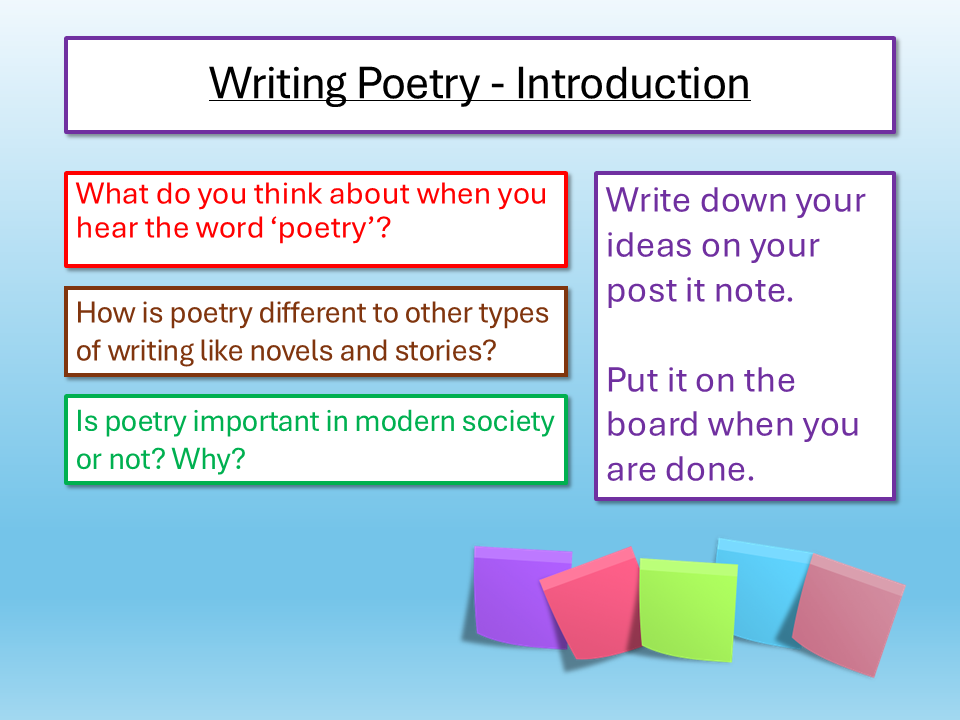
FREE Writing Poetry introduction lesson:
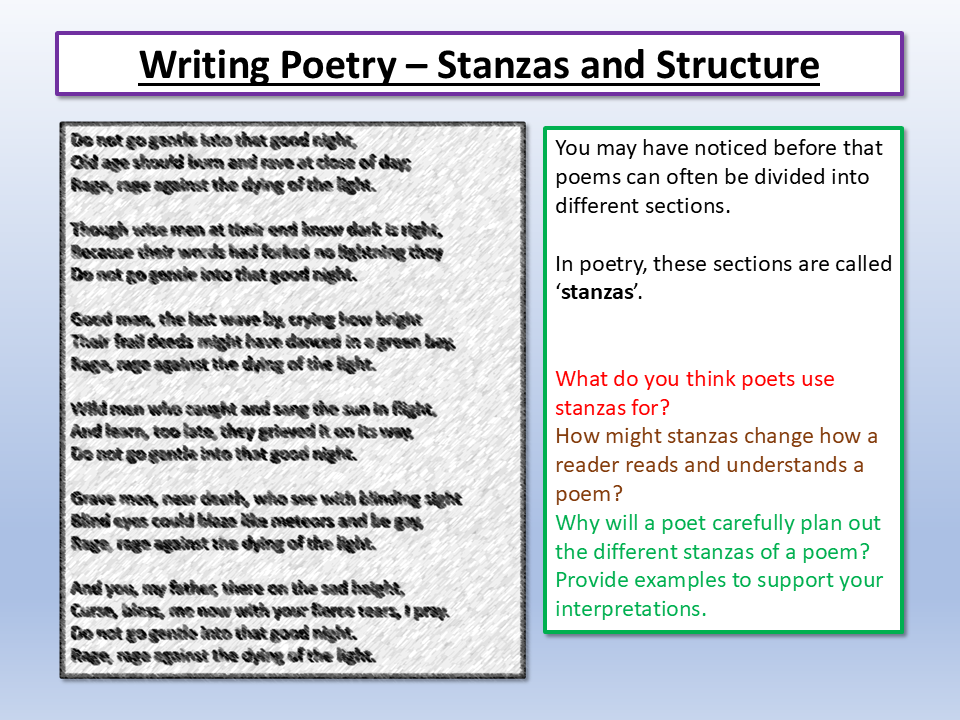
FREE Writing Poetry - Stanzas and Structure Lesson:
By exploring the works of famous writers and then adapting their skills into students' own works, it's possible to encourage creativity and improve analytical skills simultaneously.
If you are interested in trying this approach with your own students then the complete teaching pack I have designed for KS3 can be found here: